Inspect it running
What you can open right now.
Everything below is open right now — no signup, no card. The guest apps run on our own oshal deployment: the tutor and the game master answer you for real, and the trading desk is a live read-only view of the paper book. The rest are artifacts the platform generated on its own, or the source itself. A guest session clears itself after a few hours — sign in to keep your work and connect your own accounts.
Live data · guest
Intelligent Trades
The Intelligent Finance suite running against a live paper account — the real open book, average cost and unrealized P&L, the strategy sleeves, and the desk's own end-of-session recaps. Paper-traded: no live capital, and nothing here is investment advice.
Posture - paper-traded · real positions · refreshed each minute
Live · guest
Intelligent Education
A tutoring suite: a classroom of subject bots that answer questions, ground their explanations in a course corpus, track assignments, and keep a study timeline. Ask the tutor a question and watch a real reasoning turn run.
Try it - ask the tutor · grounded answers · class tools
Live · guest
Dungeon Master
An AI game master runs a tabletop adventure — narrating scenes, offering choices, rolling dice, and keeping the campaign timeline. It shows an app owning its own domain: a persona, a store of state, and a cockpit surface over it.
Try it - play a turn · narration · choices · dice
Generated artifact
Daily Trade Recap
The desk writes its own end-of-session briefing: results and return since inception, what triggered each position, market sentiment, and the open book — assembled into a deck and narrated, with no human in the loop. This is the platform generating a finished artifact, not a dashboard.
Latest session - July 24, 2026 · narrated video + 9-slide deck
Download the deck
archive below
Live
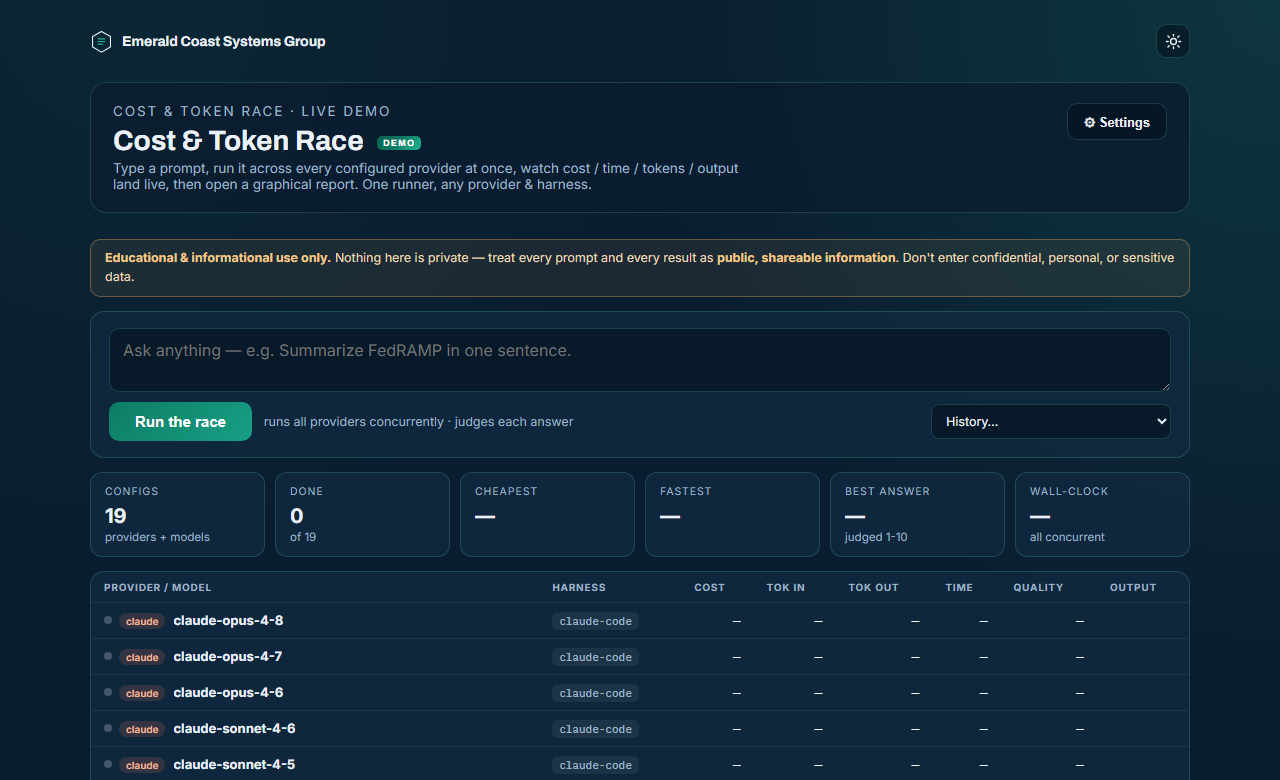
Cost & Token Race
One prompt, several models, side by side: cost, tokens, latency, and answer quality. This is the platform's provider-neutrality made visible — the same request routed across harnesses so a team can choose a model on evidence instead of habit.
Stack - multi-provider engine · live cost meter
Run the race →
Runs on our infrastructure
Source
The platform source & controls
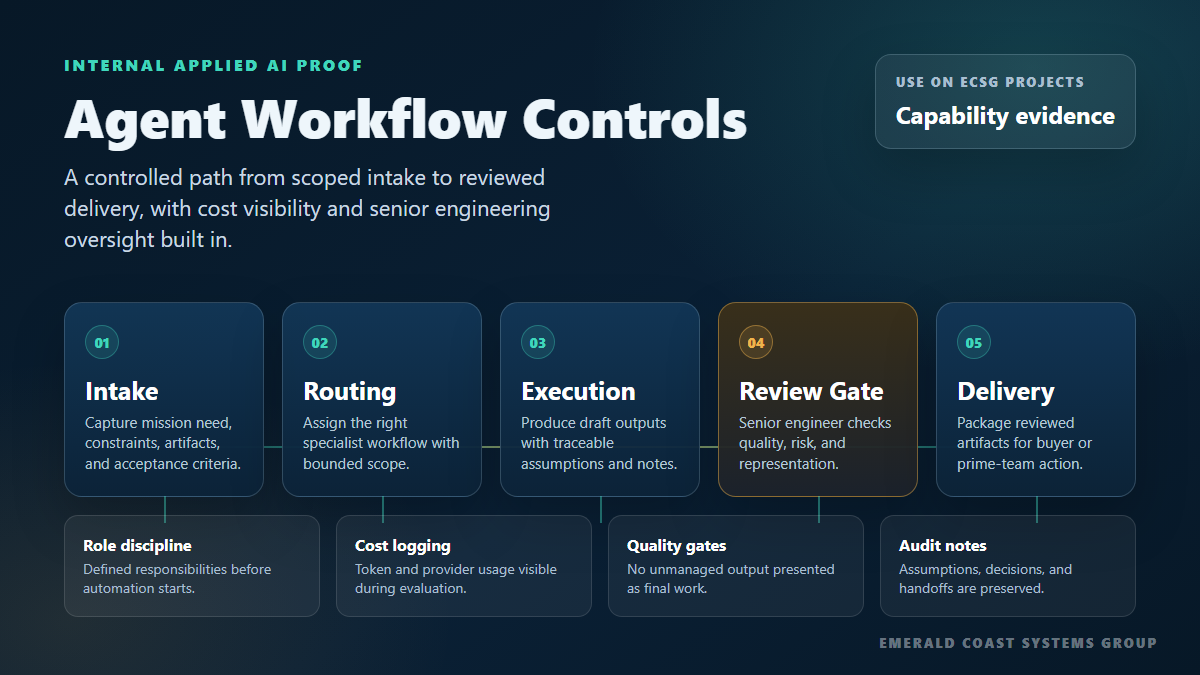
The core runtime is public under AGPL-3.0 and the application store is a separate open repository. The controls deck documents how AI-assisted work is coordinated here — explicit roles, routing, cost visibility, and review gates before anything is called done.
Role-based automation
Cost and quality gates
Senior-review posture
Evidence - readable source · open manifests · controls deck
About these demonstrations. The guest apps open our own oshal deployment; a guest session is interactive for a few hours, then clears. These are prototypes and research systems, not production federal systems. The trading desk is paper-traded — no live capital, and nothing here is investment advice. Our earlier standalone prototypes (voice intake, workforce matching, AI planning) have been retired as their capabilities moved into oshal suites. For a guided technical walkthrough — including a signed-in session driving the swarm end to end — contact us →